

Skip to content
Menu
905-388-3333

Monday – Friday: 8:00AM – 4:30PM · 24 Hour Emergency Service

A person stretching in a home with clean, fresh air

Air Quality

Balance Your Home’s Humidity With A Whole Home Dehumidifier

On this page
  1. Signs your home is too humid
  2. Benefits of a whole-home dehumidifier
  3. Whole-home dehumidifier questions

A whole-home dehumidifier removes excess moisture from your entire house, working with your air conditioner or on its own, without drying your home out. It’s quieter and more efficient than portable units, and there’s no bucket to empty.

Get a Dehumidifier Quote

Signs your home is too humid

  • Musty smells, especially in the basement
  • Condensation on windows and mirrors
  • Mould or mildew spots
  • A clammy feeling even with the AC running
  • Allergy or asthma symptoms that are worse at home

Excess moisture lets mould, mildew and dust mites thrive, which can trigger asthma and allergies.

Benefits of a whole-home dehumidifier

Healthier air

Reduces the moisture that mould, mildew and dust mites need.

Protects your home

Prevents warping, rot and musty odours in basements and crawl spaces.

More comfortable summers

Dry air feels cooler, so your air conditioner doesn’t have to work as hard.

Hands-free

Drains automatically, with no tank to empty.
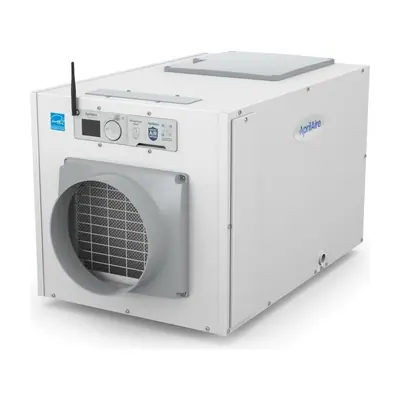
  • AprilAire Whole-Home Dehumidifiers (E-Series)
    AprilAire

    Air Quality Product

    AprilAire Whole-Home Dehumidifiers (E-Series)

    Model E070 / E070W +8

    Designed and manufactured/assembled in the USA with corrosion-resistant aluminum coils. No water tray to empty; built-in control starts dehumidification automatically when humidity is above target.

    Coverage
    Up to 2,800 ft²
    View details

Compare all indoor air quality from every brand

For cleaner air overall, combine dehumidification with a UV air purifier or duct cleaning.

What to expect

How a new air quality installation works

  1. Free in-home assessment

    We look at your home, your current system and your comfort goals. Quotes are free and no-obligation.

  2. Right-sized recommendations

    We size the system for your home and walk you through standard, mid-range and premium options from every brand we carry.

  3. Clear written quote

    You get an itemized quote, plus help with available rebates and Financeit financing.

  4. Professional installation

    Our licensed installers handle the equipment, venting, gas and ductwork connections, then test everything and clean up.

  5. Warranty and maintenance

    We explain your manufacturer warranty and how annual maintenance keeps it valid.

Helpful guides

Whole-home dehumidifier questions

What is the ideal indoor humidity in summer?

Keep indoor humidity below 50 percent in summer. Health Canada recommends 30 to 50 percent indoors and suggests running a dehumidifier when humidity goes above 50 percent or moisture condenses on cold surfaces. Above that level, dust mites and mould grow more easily, and the air feels clammy even when it's cool. A simple hygrometer will tell you where your home stands, especially in the basement.

Why is my basement so humid?

Basements are cool and partly underground, so moisture moves in through foundation walls and floors, and humid summer air condenses on cool surfaces like walls and cold-water pipes. Your air conditioner removes moisture mainly where it cools, and basements often get little cooling. Check your grading, eavestroughs and downspouts first to keep water away from the foundation, then control the remaining moisture with a dehumidifier.

Whole-home or portable dehumidifier: which is better?

For a damp basement or whole house, a whole-home dehumidifier is usually better. It removes far more moisture, runs more quietly and drains automatically, with no bucket to empty. AprilAire's whole-home models are rated from 70 to 130 pints a day. Portable units suit a single room, but in a large basement they often run constantly and wear out sooner. A whole-home unit is also controlled by a set humidity level, so it runs only when needed.

Can a dehumidifier prevent mould?

It can help prevent new mould, but it won't remove mould that's already there. Mould needs damp surfaces, so holding your home below 50 percent humidity makes it much harder for growth to start. Existing mould should be cleaned up, and its moisture source, such as a leak or poor grading, fixed first. Health Canada advises that small areas can usually be cleaned yourself, while large areas need a professional.

Doesn't my air conditioner already remove humidity?

Yes, but often not enough. An air conditioner removes moisture as a side effect of cooling, so on mild, muggy days, or when it's oversized and shuts off quickly, it doesn't run long enough to dry the air. It also does little for basements that don't need cooling. A whole-home dehumidifier controls humidity on its own, so your home stays dry without being overcooled.

How do I know if I need a whole-home dehumidifier?

If a portable dehumidifier runs all summer and still can't keep up, a whole-home unit is worth considering. Other signs are musty smells, condensation on windows or cold-water pipes, mildew spots and humidity readings regularly above 50 percent. They're especially useful for finished basements, crawl spaces and homes where someone has allergies or asthma. We can measure your humidity and recommend the right size.

Where is a whole-home dehumidifier installed?

Usually in the basement, near the furnace, or in a crawl space. It can connect to your existing ductwork so drier air is spread through the house, or be set up on its own to serve just the basement or crawl space. It drains to a floor drain or condensate pump, so there's nothing to empty. We'll recommend the setup based on where your moisture problem is.

What size whole-home dehumidifier do I need?

It depends on your home's size, how damp it is and how airtight it is. AprilAire's whole-home models, for example, range from 70 pints a day for crawl spaces up to 130 pints a day for homes up to 7,200 square feet. Undersized units run constantly and never catch up, while oversized ones cost more than you need to spend. We size dehumidifiers after looking at your home, not just its square footage.

Do whole-home dehumidifiers need maintenance?

Yes, but not much. Clean or replace the filter as the manufacturer recommends, and make sure the drain line and any condensate pump stay clear so water can't back up. It's worth having the unit checked once a year, and the easiest time is during your spring AC tune-up, which already includes checking condensate pumps and lines.

Do I need a dehumidifier in winter?

Usually not. Cold outdoor air holds little moisture, so in winter most homes need moisture added, not removed. If you have window condensation in winter, the fix is usually lowering your humidifier setting and improving ventilation with an HRV. A dehumidifier in a basement or crawl space may still run occasionally in spring and fall, when it's damp but not cold.

Will a dehumidifier make my home feel cooler?

It won't lower the temperature, but drier air feels cooler, so you may be comfortable with the thermostat set a little higher. A dehumidifier actually gives off a little heat as it works. Its real benefit in summer is taking the humidity load off your air conditioner, so the house feels comfortable instead of cold and clammy.

Ask Us a Question

Financing for new home systems

Spread the cost with monthly payments

A new furnace, air conditioner, heat pump or water heater doesn't have to wait. Start saving on energy now and pay over time.

  1. Get your free, itemized quote
  2. Apply online with Financeit
  3. Choose a monthly plan that fits
Call now Book service