Skip to content
Menu
905-388-3333

Monday – Friday: 8:00AM – 4:30PM · 24 Hour Emergency Service

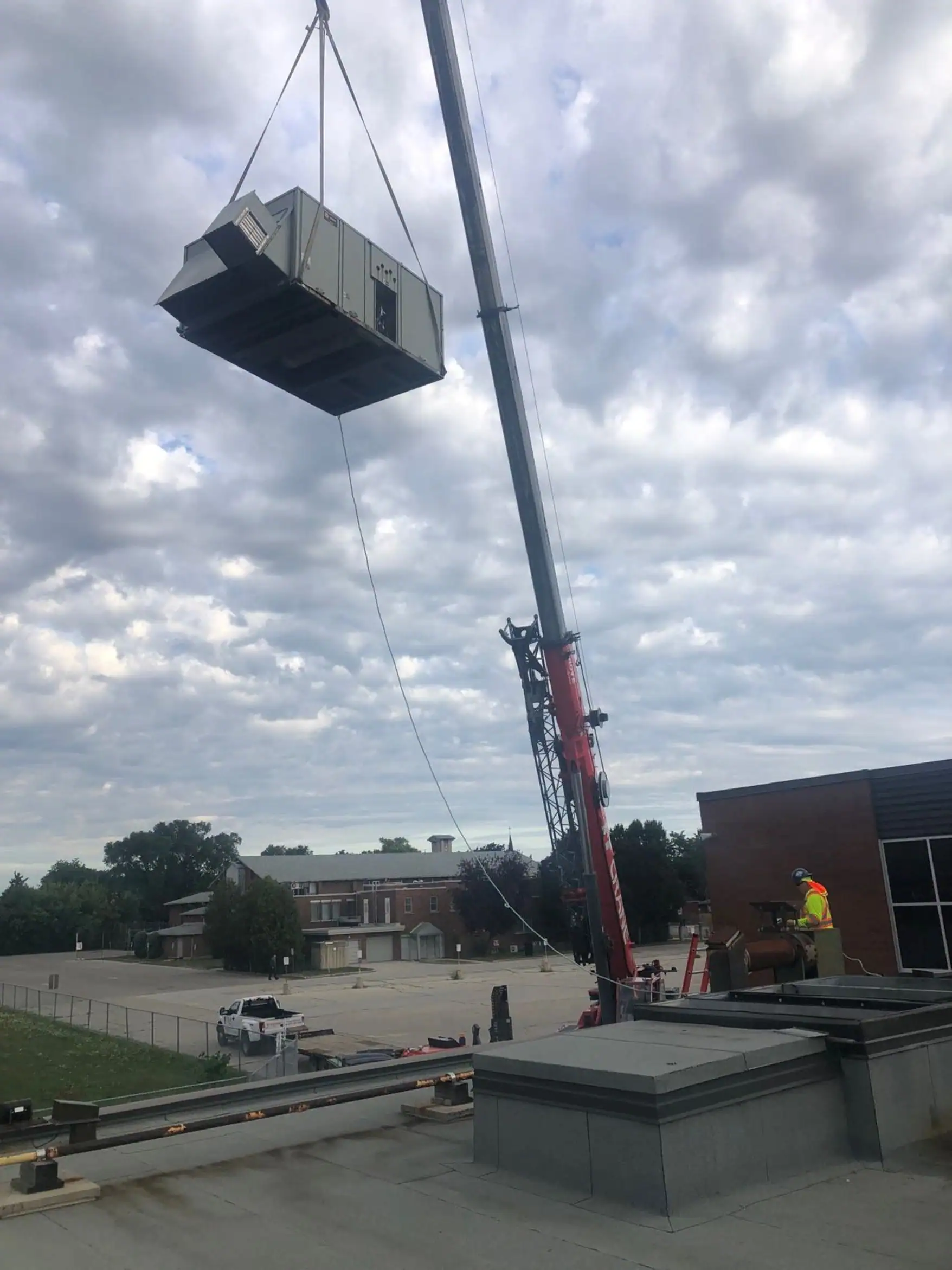
A crane lifting a packaged HVAC unit onto a commercial roof

Commercial HVAC

Make-Up Air for Restaurants, Shops and Commercial Buildings

Replace the air your exhaust removes, so hoods draw and doors open easily

On this page
  1. Who needs make-up air
  2. What we do
  3. Make-up air and the rest of your HVAC
  4. Make-up air questions

Every cubic foot of air a kitchen hood or exhaust fan pulls out of a building has to be replaced. If nothing brings it back in, the building goes into negative pressure and pulls air in wherever it can: around doors, through flues and down chimneys. A make-up air unit replaces that air on purpose, filtered and heated, so the exhaust works the way it was designed to and the building stays comfortable and safe.

Ask About Make-Up Air

Who needs make-up air

  • Restaurants and commercial kitchens. Hoods move large volumes of air. See HVAC for restaurants.
  • Shops, garages and light industrial spaces with exhaust fans or process exhaust. See shops, warehouses and light industrial.
  • Any building where exhaust was added later, such as a new tenant with a kitchen, a renovation or a change of use, without the supply air to match.

What we do

  • Assess the exhaust and ventilation. We look at how much air is leaving the building, where it’s leaving and what’s replacing it, then recommend a solution.
  • Install the make-up air. Sized to match the exhaust, with gas connections made by our licensed gas technicians. As part of Lancaster Group, the electrical can be coordinated by the same team.
  • Fabricate the curbs, transitions and ductwork in our own sheet metal shop, so the unit fits the building.
  • Maintain and repair make-up air units from any manufacturer, 24/7 when something fails. See commercial HVAC repair.

Make-up air and the rest of your HVAC

A make-up air unit works alongside the building’s heating and cooling, not instead of it. In a restaurant, for example, the rooftop units keep the dining room comfortable while the make-up air replaces what the hood removes. Getting the two to work together matters: too little make-up air and the building goes negative; too much, or air that’s too cold, and the kitchen and dining room are uncomfortable. That’s why we look at the whole building, not just the hood. See rooftop units.

Doors hard to open, or a hood that won’t draw? Call 905-388-3333 or ask about make-up air.
What to expect

How a commercial HVAC project works

  1. Site visit and assessment

    We walk the building and review your existing equipment, roof and mechanical access, and how each space is used.

  2. Options sized for your building

    Rooftop, split or ductless: we size the equipment for the load and lay out options from every brand we carry.

  3. One detailed proposal

    An itemized scope covering equipment, sheet metal, and any electrical, plumbing or gas work, so nothing falls between trades.

  4. Installation planned around you

    Crane lifts, shutdowns and noisy work are scheduled to keep your tenants, staff and customers comfortable.

  5. Start-up and ongoing service

    We start up and test the equipment, walk you through it, and set up maintenance to protect your warranty.

Our work

See all projects
  • Commercial

    Commercial HVAC

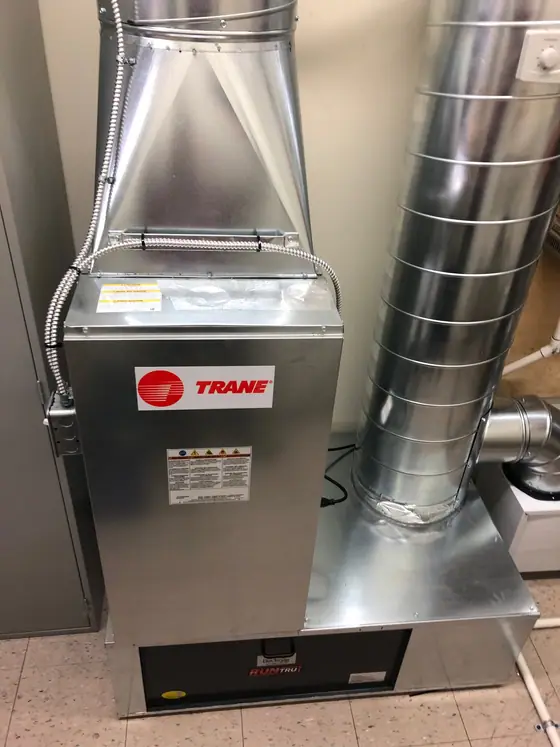
    Trane commercial installation

    A Trane indoor unit installed in a commercial building, connected to new sheet metal and spiral ductwork.

    Trane

    See our work
  • Commercial

    Commercial HVAC, Rooftop Units

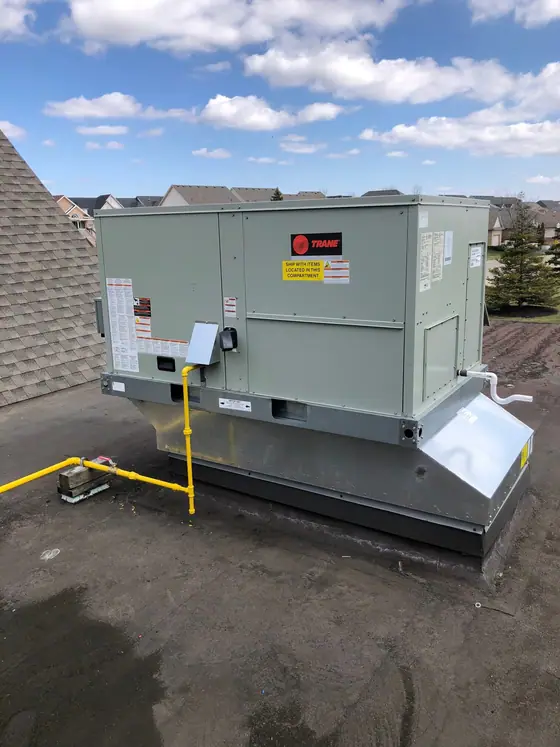
    Trane rooftop unit installed

    A Trane packaged rooftop unit on a flat roof, with its gas line run across the roof on supports.

    Trane

    See our work
  • Commercial

    Commercial HVAC

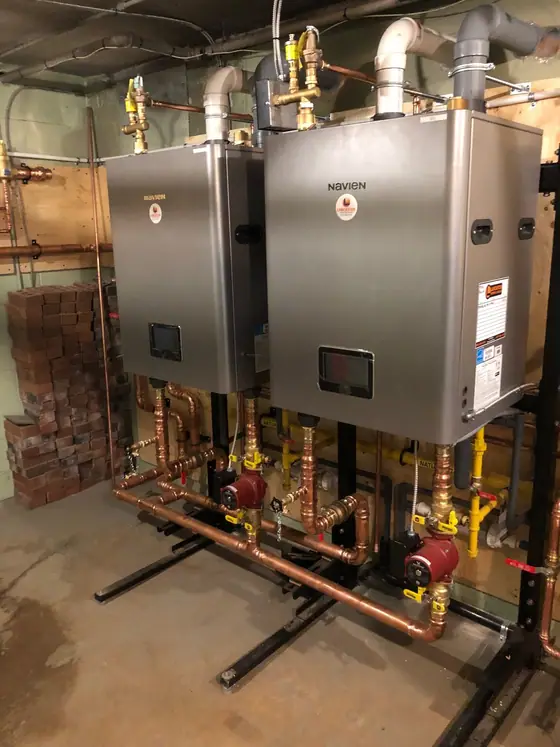
    Navien commercial installation

    Two wall-mounted Navien boilers installed side by side, with new copper piping, valves and circulator pumps.

    Navien

    See our work

Make-up air questions

What is make-up air, and does our building need it?

Make-up air is fresh outdoor air brought in, and usually heated, to replace air removed by exhaust fans and kitchen hoods. Without it, a building can become depressurized: doors are hard to open, hoods don't draw properly and gas appliances can backdraft. Restaurants and other spaces with large exhaust systems usually need it. We can assess your exhaust and ventilation and recommend a solution.

What are the signs a building doesn't have enough make-up air?

Doors that are hard to open or slam shut, a whistle at doors and windows, a kitchen hood that leaves smoke and odours behind, cold drafts near the entrance in winter, and pilot lights or burners that flicker or go out. Some of these are safety issues: if a gas appliance is backdrafting, combustion gases can spill into the building. Call us and keep carbon monoxide alarms working.

Why is make-up air heated?

In a Hamilton winter, bringing in large volumes of outdoor air without heating it would make the space uncomfortably cold and could freeze pipes or equipment near the intake. Most make-up air units in our climate heat the incoming air, usually with natural gas, to a comfortable supply temperature.

Can make-up air be added to an existing building?

Usually, yes. It depends on how much air is being exhausted, where a unit can go on the roof or wall, and the gas and electrical supply available. Because we fabricate curbs, transitions and ductwork in our own shop, we can fit a unit to an existing building instead of redesigning around off-the-shelf parts.

Does a make-up air unit need maintenance?

Yes. Like any gas-fired heating equipment, it should be checked before the heating season: burners, ignition, safety controls, belts and filters. Filters in kitchens and dusty spaces may need changing more often. We maintain and repair make-up air units from all manufacturers. See commercial preventive maintenance.

Ask Us a Question
Call now Book service