
Hot water accounts for a large share of a home’s energy use. Here’s how the two main types compare.
Tank (storage) water heaters
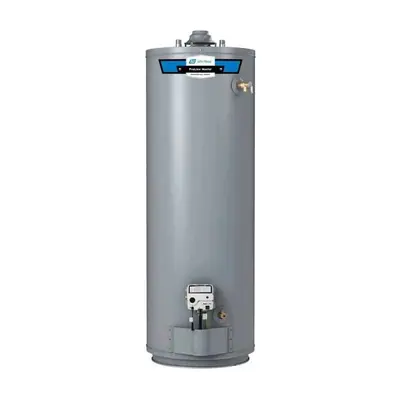
A tank water heater keeps a reservoir of water hot and ready, typically 40 to 75 gallons in a home.
Pros
- Lower purchase and installation cost.
- Simple, familiar technology.
- Delivers strong flow to several fixtures at once until the tank runs low.
Cons
- Can run out of hot water during heavy use, then needs time to recover.
- Uses energy keeping water hot when you’re not using it (standby loss).
- Takes up floor space, and a leaking tank can flood a basement.
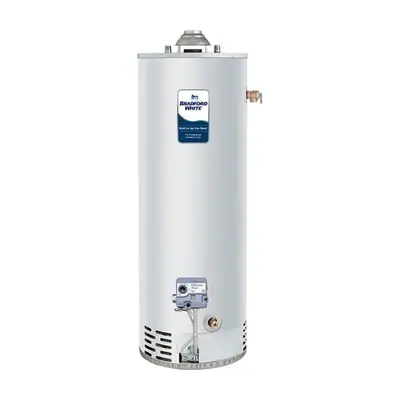
Gas power-vent models like the Bradford White units we install vent through a wall, so they don’t need a chimney.
Tankless (on-demand) water heaters
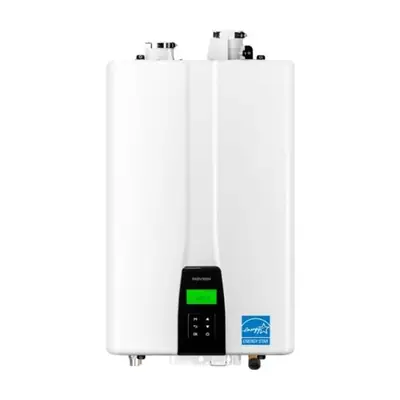
A tankless water heater heats water only when you open a tap.
Pros
- Endless hot water: no waiting for a tank to recover.
- Wall-mounted and compact, which frees up basement space.
- No standby loss, so it uses less energy.
- Typically lasts longer than a tank.
Cons
- Higher up-front cost; may need a larger gas line or new venting.
- Needs yearly descaling to remove mineral build-up.
- Must be sized for how many fixtures you use at once.
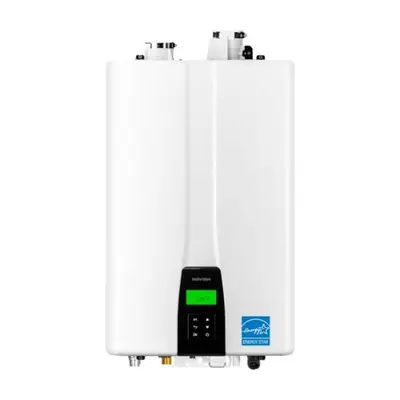
Condensing tankless water heaters, like the Navien models we install, are among the most efficient gas options. Some Navien combi units also heat your home.
Heat pump water heaters
A heat pump water heater uses electricity to move heat from the surrounding air into a tank. It’s very efficient and a good fit for homes without natural gas. Ask us whether your space is suitable.
Which should you choose?
- Large household, frequent long showers, or short on space: tankless.
- Smaller household or tight budget: a high-efficiency tank.
- No natural gas: a heat pump or electric tank.
Get it installed right
Lancaster Heating and Cooling installs Navien, Bradford White and John Wood water heaters across Hamilton, Halton and Niagara. See water heater installation, or request a free quote.